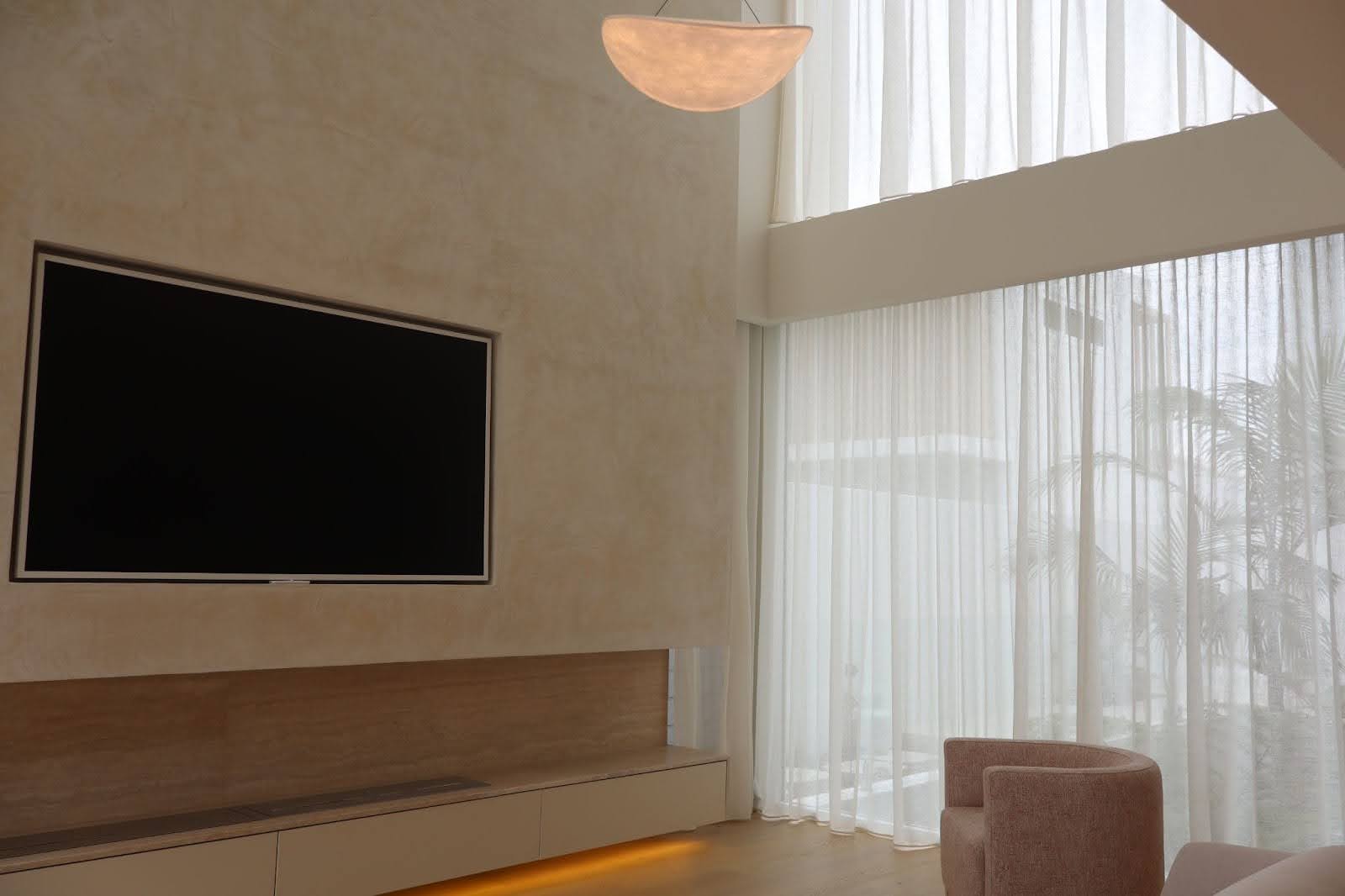
Venetian plaster has remained one of the world’s most respected decorative wall finishes for centuries. Originating in Ancient Rome and refined during the Venetian Renaissance, this lime-based finish continues to define luxury interiors through its natural depth, timeless appearance, and handcrafted character.
Today, Venetian plaster is increasingly specified by homeowners, interior designers, architects, and custom builders throughout the Denver metro area and Colorado. As modern interiors move away from flat painted walls and mass-produced finishes, mineral plasters offer something difficult to replicate—a surface with genuine texture, movement, and individuality.
Unlike conventional paint, Venetian plaster interacts with natural and artificial light, creating subtle variations throughout the day. Unlike wallpaper, it forms a seamless architectural finish with exceptional longevity. Properly installed, it becomes part of the building rather than simply another decorative layer.
This guide explains the different types of Venetian plaster, where each finish performs best, what design professionals should consider before specifying it, and why Colorado’s climate makes it particularly well suited for lime-based decorative finishes.
Why Venetian Plaster Has Become Increasingly Popular in Colorado
Colorado’s residential architecture has changed significantly over the past decade. Luxury custom homes, mountain retreats, and contemporary urban residences increasingly emphasize natural materials, warm textures, and handcrafted finishes instead of purely painted surfaces.
Venetian plaster fits perfectly within this design philosophy.
Its composition—primarily slaked lime and finely ground marble dust—creates a finish that offers depth without overwhelming a space. Depending on the application technique, it can resemble polished marble, natural limestone, weathered travertine, or soft mineral stone while remaining considerably lighter than natural masonry.
The finish is also exceptionally compatible with Colorado’s environment. Low humidity allows lime plasters to cure gradually through carbonation, producing a dense and durable mineral surface. Combined with Colorado’s abundant natural light, Venetian plaster develops visual depth that changes throughout the day, making walls appear more dynamic than conventional painted surfaces.
For homeowners investing in custom interiors, Venetian plaster represents more than decoration—it becomes an architectural element that adds permanence, character, and long-term value.
Understanding Different Venetian Plaster Finishes
Although the term Venetian plaster is often used as a general description, it actually refers to several decorative plaster systems, each producing a unique visual effect.
Marmorino — Soft Natural Stone Appearance
Marmorino is one of the most versatile decorative plasters available. Its appearance ranges from matte to satin depending on the application technique and protective finish, creating the impression of softly aged limestone.
Because of its understated elegance, Marmorino complements a wide variety of architectural styles—from contemporary minimalist homes to traditional European-inspired interiors.
It is frequently specified for:
- Living rooms
- Entryways
- Dining rooms
- Staircases
- Luxury bedrooms
The finish pairs especially well with natural wood, limestone flooring, white oak cabinetry, and oversized windows commonly found in Colorado homes.
Grassello di Calce — Polished Marble Effect
Grassello represents one of the most refined forms of Venetian plaster.
Applied in multiple extremely thin coats and carefully burnished, it develops remarkable depth with a subtle reflective quality similar to polished marble.
Rather than creating obvious texture, Grassello emphasizes light, translucency, and movement.
It is commonly selected for:
- Luxury feature walls
- Boutique hotels
- High-end residential interiors
- Executive offices
- Formal living spaces
Because lighting dramatically influences its appearance, Grassello performs particularly well in rooms with generous natural daylight.
Travertino — Architectural Texture
Travertino creates a stronger architectural statement.
Unlike polished Venetian finishes, it intentionally incorporates texture and visible movement inspired by natural travertine stone. The result is bold without appearing artificial.
Travertino works particularly well on:
- Fireplace surrounds
- Wine rooms
- Spa-inspired bathrooms
- Restaurant interiors
- Accent walls
Its dimensional surface makes it especially effective in mountain homes where natural materials define the overall interior aesthetic.
Limewash vs. Venetian Plaster
Although both finishes are lime based, they create completely different visual experiences.
Limewash produces a soft, cloudy appearance with gentle tonal variation that feels relaxed and organic.
Venetian plaster creates greater depth, density, and permanence while allowing finishes that range from matte stone to highly polished marble.
Rather than competing, many designers combine both materials within the same home—using limewash to soften larger living spaces while reserving Venetian plaster for fireplaces, entryways, feature walls, and other architectural focal points.
Where Venetian Plaster Performs Best
One of Venetian plaster’s greatest advantages is its versatility. While virtually any interior wall can be finished with decorative plaster, certain applications showcase its strengths particularly well.
Living Rooms and Feature Walls
Feature walls remain one of the most common applications.
Instead of relying on artwork or bold paint colors to create visual interest, a Venetian plaster wall introduces texture, depth, and changing light reflections that naturally become the focal point of the room.
Because the finish is seamless, it also helps larger open-plan spaces feel warmer without interrupting architectural flow.
Luxury Kitchens
Modern luxury kitchens increasingly extend decorative finishes beyond cabinetry.
Venetian plaster is frequently used on hood surrounds, breakfast areas, dining spaces, and feature walls adjacent to kitchens, complementing natural stone countertops and custom millwork.
Where moisture or occasional splashes are expected, selecting the appropriate protective sealer is essential for long-term performance.
Spa-Inspired Bathrooms
When correctly specified and professionally sealed, Venetian plaster performs beautifully in powder rooms, vanity walls, and luxury bathrooms.
Its seamless appearance creates a calm, spa-like atmosphere while eliminating grout joints that often dominate tiled surfaces.
For continuously wet environments such as shower enclosures, specialized waterproof plaster systems are generally recommended instead of traditional Venetian plaster.
Fireplaces in Colorado Mountain Homes
Fireplaces provide one of the strongest opportunities to showcase decorative plaster.
Across Aspen, Vail, Breckenridge, and other mountain communities, textured mineral finishes frequently replace conventional stone veneers or painted drywall.
Travertino and Marmorino are particularly effective because they complement timber beams, natural stone flooring, and contemporary mountain architecture while creating a sophisticated focal point that remains timeless.
Design Considerations Before Specifying Venetian Plaster
Successful Venetian plaster projects begin long before the first coat is applied.
Surface preparation is critical. Decorative plaster reveals imperfections rather than hiding them, meaning drywall must be smooth, properly finished, and correctly primed.
Lighting should also be evaluated carefully. Colorado’s high altitude and strong natural sunlight influence how mineral finishes appear throughout the day. A finish selected under artificial showroom lighting may look noticeably different inside the completed home.
Project scheduling is equally important. Venetian plaster requires multiple coats with curing time between applications, making coordination with painters, flooring installers, cabinet installers, and trim carpenters essential for efficient construction sequencing.
Common Mistakes Homeowners Make
Many disappointing Venetian plaster projects result from unrealistic expectations rather than the material itself.
The most common mistakes include:
- Choosing a contractor with limited decorative plaster experience.
- Assuming every Venetian plaster finish looks the same.
- Selecting colors before evaluating natural lighting.
- Underestimating the importance of wall preparation.
- Using inappropriate sealers in bathrooms or kitchens.
Because every finish is applied by hand, craftsmanship remains just as important as the materials themselves.
Conclusion
Venetian plaster offers a unique combination of craftsmanship, durability, and timeless design that few modern wall finishes can match. Whether the goal is a polished contemporary interior, a warm Mediterranean-inspired residence, or a sophisticated mountain retreat, decorative lime plasters provide a level of depth and authenticity that conventional paint and wallpaper simply cannot achieve.
For homeowners, architects, and interior designers researching premium wall finishes, understanding the differences between plaster systems is the first step toward selecting the right material for each project. Those interested in learning more about Venetian plaster in Denver and the range of available decorative plaster finishes can explore additional information and professional application methods through Enjoy The Wall’s decorative plaster resource.