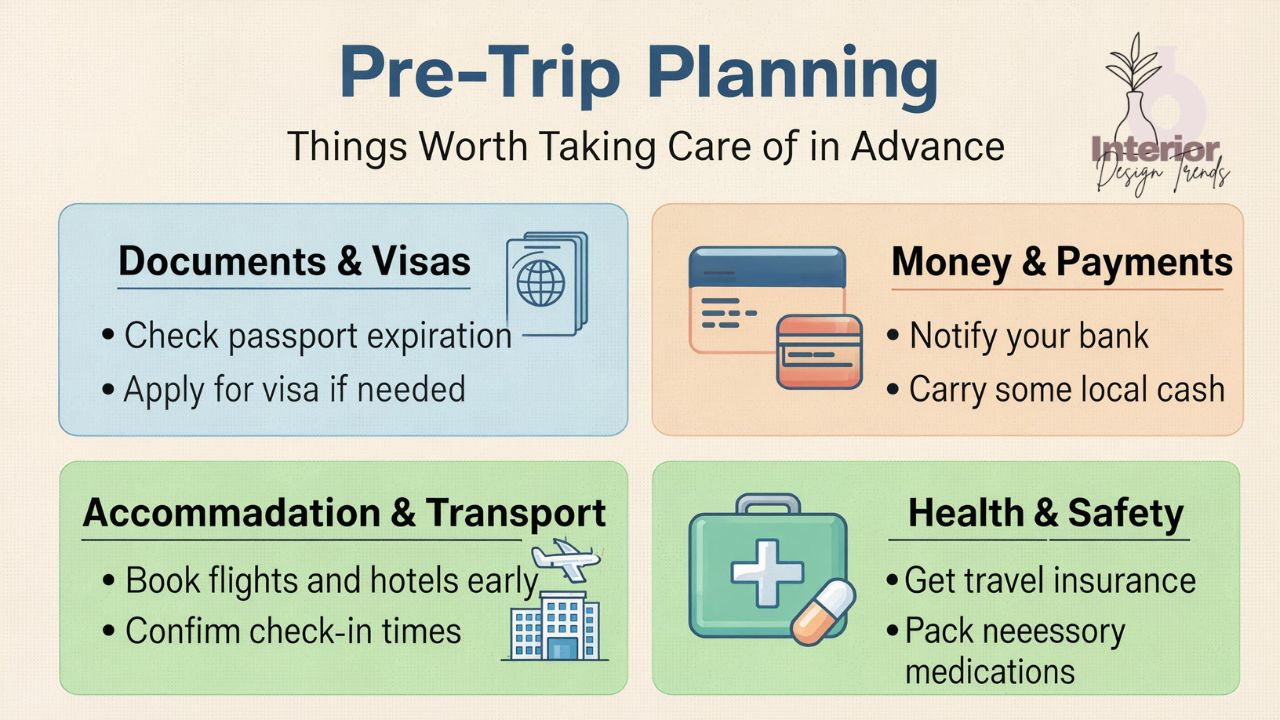
Thoughtful preparation shapes the entire travel experience, and the steps taken beforehand influence comfort, safety, and peace of mind. Travelers usually think about packing first, yet many other pieces deserve attention well before departure. Documents need to be current, the home needs to feel secure, health needs require a bit of planning, and money matters benefit from clarity.
A smooth trip begins long before the journey starts, and a little structure makes everything feel more manageable. Purposeful planning creates space for excitement instead of last-minute stress, which makes each stage of travel feel lighter and more enjoyable.
Travel Documents and Identification
A valid passport is the foundation of international travel, so checking its expiration date early gives plenty of time for renewal if needed. Some destinations require a passport to remain valid for several months beyond the travel dates, so a quick review prevents unnecessary complications.
Visa rules vary widely, and each country sets unique entry conditions that travelers must meet before boarding. Digital and physical copies of essential documents add a layer of security, since unexpected situations can arise during transit.
Home Protection and Insurance Preparation
Travel feels more relaxing when the home feels secure. Doors, windows, and alarm systems deserve a careful look before leaving, and small details such as lighting timers can give the home a lived-in appearance. Sharing travel dates with a trusted neighbor or friend adds another layer of security, since someone nearby can keep an eye on things.
Renters insurance adds even more reassurance by protecting belongings in case something goes wrong while the traveler is away. To better understand renters insurance and how it can help while you’re away, visit https://www.sofi.com/online-insurance/renters-insurance/. With these protections in place, travelers can enjoy their journey with fewer concerns and greater peace of mind.
Medical Needs and Personal Health Arrangements
Health preparation builds confidence during travel, especially when visiting unfamiliar places. Prescriptions should be filled ahead of time, and it helps to pack enough medication for the entire trip, plus a small buffer. A compact health kit with essentials such as pain relievers, adhesive bandages, and motion-relief tablets brings comfort during unexpected moments.
Emergency contacts and insurance information should be easy to access in case medical attention becomes necessary. Travelers benefit from reviewing coverage for out-of-area care so they understand what to expect if they need help while away. Strong health preparation supports a relaxed mindset throughout the trip.
Itinerary Structuring and Activity Planning
A flexible yet intentional itinerary sets a comfortable pace for travel. Researching attractions and local highlights provides helpful context, and checking hours or ticket requirements prevents surprises upon arrival. Transportation details deserve attention as well, since travel times and schedules influence how much can realistically fit into each day.
A simple digital folder or travel app can keep reservations, confirmations, and maps organized. Clear structure helps travelers feel grounded while still leaving room for spontaneous discoveries that make a destination special.
Budget Preparation and Money Management
Financial clarity leads to smoother decision-making on the road. A basic spending plan for meals, transportation, activities, and souvenirs helps travelers stay aware of their limits without feeling restricted. Alerting banks about travel dates reduces the chance of declined transactions and supports a consistent payment experience.
Payment variety brings convenience, so carrying a mix of cards and a modest amount of local currency can be helpful. Understanding potential fees for foreign transactions saves trouble later and encourages mindful choices.
Packing Strategy and Essential Gear Review
A practical packing plan makes travel days calmer and more organized. A clear list helps cut down on unnecessary items and keeps the focus on what truly matters for the destination. Clothing choices should match the climate and the activities planned, and selecting versatile pieces reduces the number of items in the suitcase.
Chargers, power adapters, and small accessories need a dedicated spot so nothing gets left behind during the rush to the airport. Luggage quality deserves attention as well, since sturdy zippers and comfortable handles shape the experience during long walks through terminals or stations. A simple moment spent reviewing the essentials brings a sense of readiness that continues throughout the trip.
Communication Planning and Connectivity Needs
Reliable communication becomes a priority once travelers step into unfamiliar territory. Phone plans should be reviewed ahead of time to confirm international usage, data limits, or the need for a temporary add-on. A portable hotspot can help keep navigation and messaging smooth when Wi-Fi is unavailable.
Sharing the itinerary with a trusted contact provides safety support, and it helps someone back home understand where the traveler should be at certain points. Important apps such as maps, translation tools, and transit guides work best when downloaded early, especially for areas with limited connectivity. Small steps like these allow travelers to stay connected without disruption.
Transportation and Accommodation Confirmation
Clear confirmation of transportation and lodging removes stress during departure week. Flight or train details need a careful look to ensure the correct times and terminals are noted. Accommodation reservations should be double-checked for check-in instructions, payment requirements, and any identification needed at arrival.
Local transit passes can simplify movement once travelers reach their destination, and reviewing them beforehand saves time. Car rentals require an understanding of age limits, insurance rules, and deposit expectations. A few minutes spent reviewing these pieces creates smoother transitions throughout the journey.
Strong preparation steers the entire trip toward a more enjoyable and confident experience. Each step leading up to departure supports a sense of control that carries through every moment on the road. Travel feels lighter when documents are ready, the home feels secure, health needs are covered, and the main logistics are mapped out.
A short checklist based on these sections keeps everything organized and prevents overlooked details. Good planning doesn’t remove spontaneity; it gives travelers the comfort they need to enjoy new places with a clear mind. A trip that starts smoothly has a better chance of unfolding with the ease and excitement travelers hope for.